â€å“animal Cruelty in the Fashion Industry.ã¢â‚¬â Fashion With a Heart
Late American model-actor Rue McClanahan's famous line, "Cruelty is 1 mode statement we can all practice without," was the beginning thing that came to our mind when we read reports regarding Italian designer Giorgio Armani'southward decision to cease using fur for all his products.
Read: Mode rex Giorgio Armani goes fur costless
This movement follows years of lobbying by animal rights activists, who have consistently promoted fashion without the use of animal pare.
While beast cruelty has been one of the harshest truths of the fashion industry, things are gradually changing for the better now.
Today, everything, from faux fur stoles to imitation leather boots, is upwardly for grabs, and being promoted by several designers.
A global move
Earlier Armani, Calvin Klein, Ralph Lauren and Stella McCartney were some of the designers who switched to animal-friendly creations. Closer home, too, designers have been making efforts to shun materials and elements that either cause damage to animals, or the environment, in general. "I can see more and more social awareness and responsibility among the design fraternity in the recent years," says designer Anavila Misra, who but uses organic materials for her designs, and stays clear of animate being fibre.
Read: The number one trend right now, cold shoulder tops
Echoing a similar stance, designer Gaurang Shah, who has been promoting India's handloom manufacture for many years now, says, "Fashion needs to be sustainable in a manner that information technology does not harm animals or the environment, and at the same time, meets the expectations of the consumers. I am an ardent believer in beingness absolutely natural, when it comes to clothing, textiles, and the colours that are used as dyes. I love cotton, silks and khadi. At that place are abundant natural elements that tin can be used for material designing and colouring. I refrain from using anything that is constructed, or has annihilation to practice with animals."
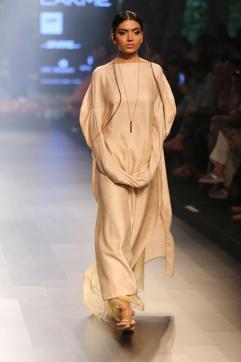
In fact, many designers, including Priyanka Ella Lorena Lama, Archana Kochhar and Shruti Sancheti, amid others, have also moved to using Ahimsa Silk, which is created using a process that does not involve the killing of the silk worm. It is often too referred to every bit 'the material of peace'.
What the constabulary says
The utilize of animal products similar ivory, fur, and even shells and corals are illegal in India. In fact, the sale and possession of shahtoosh, a fabric woven with the fur of the Tibetan antelope (chiru), is banned. But, in that location are still several practices and materials that, the manner industry in Bharat feels, should exist avoided. "I hope beast skins, fur and all such materials that encourage poaching and hunting, and pose a threat to animals — endangered or otherwise — should be made illegal. Equally it is, in today's world, with advancement in engineering, faux fur, feathers, etc, mimic the real thing so closely," says designer Payal Khandwala.
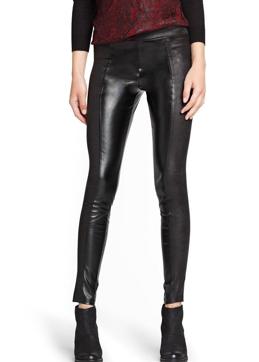
In fact, the use of leather and other types of animate being skins for style is not only roughshod, just it also harms the surround. "Tanneries are some of the most polluting industries," reveals NG Jayasimha, managing director, Humane Society International, Bharat.
Read: Desi designers create eco fur, win big
He adds, "Consumers and retailers should motion away from stone-age fabrics to digital-age ones. The Government of India should encourage alternatives to animal skin that are humane, and more environmentally sustainable. Any person who wears a leather glove has blood on his or her easily."
Other avoidable fabrics
Designer Ridhi Mehra feels that autonomously from animal skin, other fabrics that should exist shunned by the manner world are rayon, acrylic and nylon. "Rayon is recycled wood lurid and is treated with harsh chemicals to survive regular washing and wearing," she says.
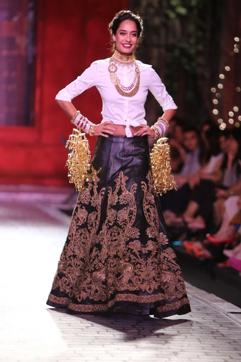
To this listing, Shah adds polyester, the virtually widely used manufactured fibre that is fabricated from petroleum. "All synthetic fabrics that are made with energy intensive processes, and require big amounts of rough oil, should be avoided past the industry. Instead, we can consider using sustainably grown cotton, hemp, bamboo, and other fibre crops that require fewer pesticides, irrigation, and other inputs," he says.
Have it boring
Some designers are of the stance that fast fashion — designs that once showcased on the ramp are swiftly manufactured and displayed in stores — is also creating stress that adversely affects the ecosystem. Designer Wendell Rodricks says, "We do non realise that everything we habiliment impacts the earth." He adds, "The amount of water and vegetal produce that goes into harvesting natural fibres is much less. It's better to buy an expensive long-lasting cotton T-shirt than buying multiple inexpensive ones that touch or harm the natural elements of this planet."
0 Response to "â€å“animal Cruelty in the Fashion Industry.ã¢â‚¬â Fashion With a Heart"
Post a Comment